
Modern training routines — whether high-performance sports or regular gym workouts — place continuous stress on the body. Effective recovery is no longer optional; it is essential. Thai massage for athletes has become one of the most complete bodywork therapies to improve performance, reduce muscular fatigue and prevent injuries naturally.
At Pia Thai Massage, this traditional technique is adapted to the specific needs of runners, weightlifters, cross-training practitioners, martial artists and physically active individuals.
What Is Thai Massage and Why Is It Ideal for Athletes?
Traditional Thai massage combines:
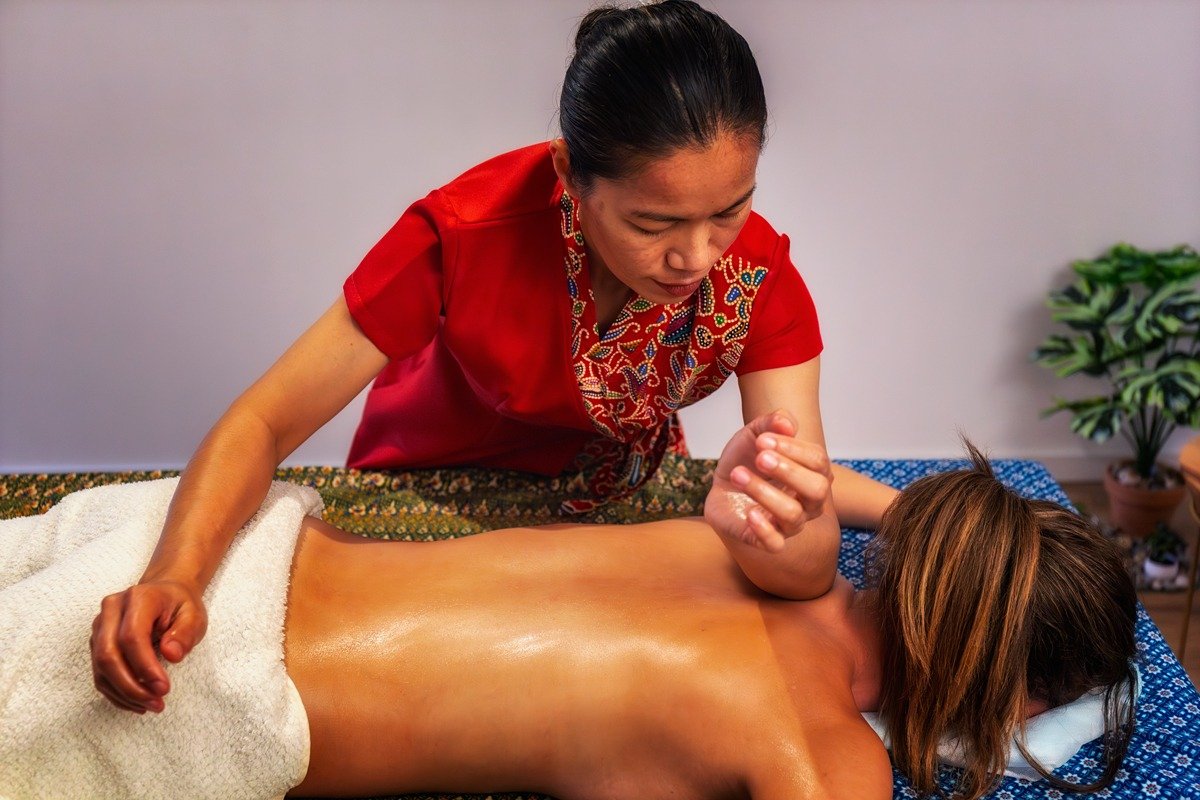
- Deep rhythmic pressure using hands, thumbs, elbows and forearms
- Assisted stretching similar to passive yoga
- Joint mobilization techniques
- Work along the body’s energy lines (Sen lines)
Unlike standard Western sports massage, Thai massage does not focus solely on isolated muscles. It integrates mobility, breathing and full-body balance, making it particularly effective for active individuals seeking functional improvement rather than simple relaxation.
Key Benefits of Thai Massage for Athletic Performance
1. Reduces Muscular Fatigue
After intense workouts, metabolic waste accumulates in muscle tissue. Thai massage helps:
- Stimulate blood circulation
- Promote toxin elimination
- Decrease muscle stiffness
- Speed up post-training recovery
This allows athletes to return to training sooner with less discomfort.
2. Improves Muscle Oxygenation
Enhanced circulation supports better oxygen delivery to tissues. As a result:
- Muscles recover faster
- Performance improves in subsequent sessions
- Chronic overload risk decreases
For individuals training three or more times per week, this benefit is crucial for maintaining consistency.
3. Increases Flexibility and Range of Motion
Assisted stretches allow deeper range of motion compared to active stretching alone.
Direct benefits include:
- Improved hip and shoulder mobility
- Better squat and lifting mechanics
- Reduced tension in back and neck
- Greater joint fluidity
For disciplines such as running, weight training and martial arts, mobility directly influences performance and injury prevention.
4. Helps Prevent Injuries
Many sports injuries develop due to:
- Muscular imbalances
- Limited mobility
- Persistent tightness
- Accumulated stress
Thai massage works globally across the body, helping detect tension patterns before they evolve into serious injuries. By restoring balance and flexibility, it reduces compensatory movement that can stress knees, lower back or shoulders.
Historical Connection with Muay Thai
Thai massage has a long-standing connection with Muay Thai, Thailand’s traditional martial art.
Historically:
- Fighters received Thai massage before training to prepare muscles and joints
- It was used after intense sessions to accelerate recovery
- It formed part of regular physical maintenance in training camps
It was not considered a luxury, but a strategic tool for maintaining performance and extending athletic careers.
When Should Athletes Receive Thai Massage?
Before Exercise
Recommended when:
- There is noticeable stiffness
- Improved mobility is needed before competition
- Activation and joint preparation are required
Pre-training sessions should be dynamic and not excessively deep to avoid muscle fatigue.
After Exercise
This is the most common and beneficial timing.
Post-workout Thai massage helps:
- Reduce inflammation
- Accelerate muscle recovery
- Minimize soreness
- Calm the nervous system
It supports long-term training consistency and performance optimization.
How Often Should Active Individuals Receive Thai Massage?
Frequency depends on training load:
- Moderate training (2–3 sessions per week): once every 3–4 weeks
- Intense training (4–6 sessions per week): every 2 weeks
- High-performance athletes: weekly, depending on program demands
Preventive care is more effective than waiting for pain to appear.
Thai Massage vs. Relaxation Massage
Thai massage for athletes:
- Is deeper and more structured
- Includes assisted stretching
- Focuses on mobility and function
- Aims to enhance performance
Its purpose extends beyond relaxation to functional improvement and injury prevention.
Personalized Approach at Pia Thai Massage
At Pia Thai Massage, each session is adapted to:
- The type of sport practiced
- Training frequency
- Overloaded muscle groups
- Previous injury history
The objective is clear: optimize recovery, enhance flexibility and maintain performance over time.
Conclusion
Thai massage for athletes is more than a traditional therapy. It is a strategic recovery method that helps:
- Eliminate muscular fatigue
- Improve flexibility
- Enhance oxygenation
- Prevent injuries
- Maintain consistent athletic performance
Integrating Thai massage into a training routine supports both immediate recovery and long-term physical sustainability.
